Fitting a suspension lift kit in your home garage is a rewarding project, but it requires solid mechanical competence, proper safety gears, and heavy-duty shop tools. This illustrated tutorial outlines the critical phases of a DIY lift kit install, from lifting the truck on jack stands to final torques and immediate alignment requirements.
Essential Tools for the Job
Do not attempt a suspension teardown with standard hand wrenches. You will need: a heavy-duty floor jack, 6-ton high jack stands (to lift tall frames), a robust pneumatic or cordless impact wrench, a complete 1/2-inch drive metric socket set, tie-rod separators, ball-joint tools, and a reliable torque wrench capable of setting up to 150 ft-lbs.
Recommended ReadQuickJack vs Traditional Jack Stands Safety ComparisonStep 1: Vehicle Prep & Disassembly
Loosen your wheel lug nuts while the truck is grounded. Safely jack up the front frame and place the heavy-duty stands underneath. Never rely solely on a rolling floor jack! Remove the wheels, and spray all factory control arms, sway bar links, and shock mount bolts with deep penetrating oil (such as PB Blaster). Let it sit for 15 minutes.
Recommended ReadAutomatic Portable Car Lift Reviews and RatingsStep 2: Strut and Knuckle Removal
Disconnect the speed sensor ABS brackets and brake line brackets from the knuckle to prevent stretching. Support the lower control arm, and unbolt the upper ball joint and steering tie-rod. Using a pickle fork or hammer, strike the side of the knuckle to pop out the taper fit. Then unbolt the lower shock mounts and three upper strut tower nuts. Carefully slide out the factory coilover strut assembly.
Recommended ReadBest Lift Kits: Complete Buyers Guide & Suspension ReviewsStep 3: Fitting the Lift Components
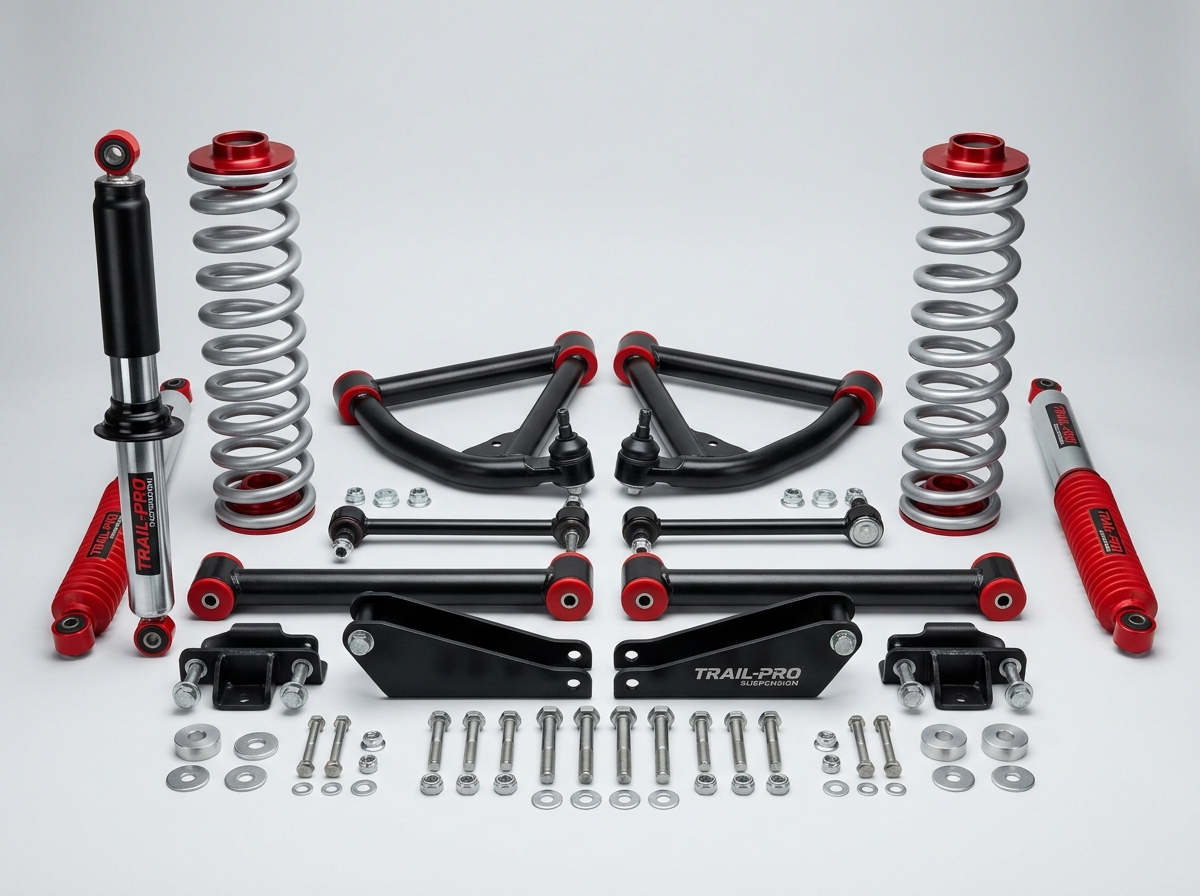
For a leveling spacer, bolt the billet aluminum spacer directly onto the top plate of your factory strut, then slide the strut back into the truck rotated 180 degrees if instructed. For full lift systems, install the replacement lifted struts, beefier correction control arms, and high-clearance drop brackets to keep CV joints operating on clean hub axes.
Recommended ReadAffordable Portable Car Lift Under 00Step 4: Rear Block or Add-a-Leaf
Moving to the rear, support the axle with jack stands, unbolt the factory U-bolts, and lower the axle slightly. Insert the lift blocks (making sure any built-in taper points toward the front to preserve CV axle angles). Install the longer heavy-duty U-bolts and torque them down in a star pattern slowly. Install the longer rear off-road shock absorbers.
Recommended ReadLeveling Kit vs. Suspension Lift Kit: Which is Best for Your Truck?Step 5: Final Check, Alignment, and Torques
Once everything is in place, put the wheels back and slowly lower the truck onto the ground under its full weight before performing final bolt torquing. Shock bushings, leaf springs, and control arm bushing pins must be torqued ONLY when the vehicle is at static ride height; torquing them in mid-air will twist and tear the rubber bushings immediately.
Recommended ReadPortable 2 Post Car Lift for Driveway UseCRITICAL WARNING: Your front alignment will be completely off immediately after installing a lift kit. Drive the vehicle slowly directly to a local alignment specialist to have caster, toe-in, and camber professionally reset. Failing to do this can ruin aggressive tires within 100 miles of highway driving.